

Types of Shipping Containers & Their Uses: The Ultimate Guide for Smart Shipping

Introduction
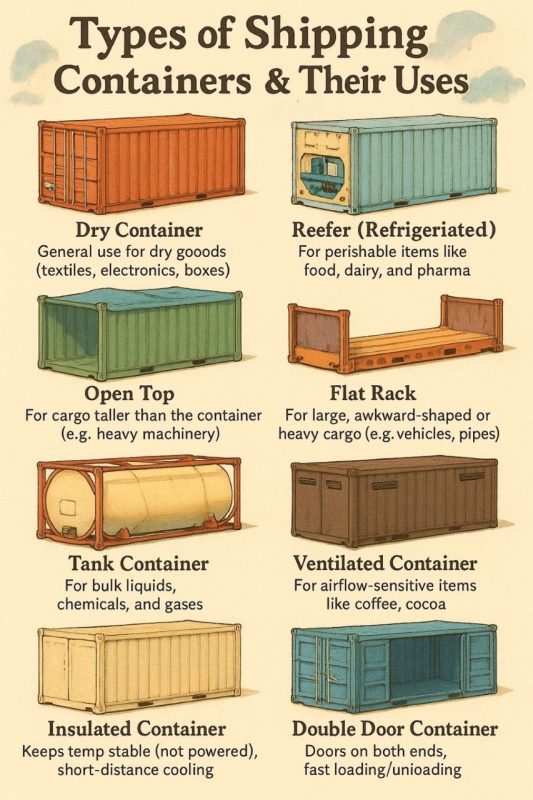
Ever wondered why some shipping containers are taller, some have open tops, and others look like giant soup cans? If you’re new to shipping or just trying to make smarter logistics decisions, understanding the types of containers out there can save you a lot of money and stress. Let’s break it all down..
Dry Containers (Standard Containers)
These are the bread and butter of global shipping. Most of the goods you see on store shelves were likely shipped in these.
20’ GP (General Purpose) Container
Dimensions
Roughly 20 feet long, 8 feet wide, and 8.6 feet high.
Common Uses
Think heavy stuff—machinery, steel parts, minerals, and packed goods. Since the container isn’t too long, it’s perfect for dense cargo where weight matters more than volume.
40’ GP (General Purpose) Container
Dimensions
40 feet long but the same width and height as the 20-footer.
Common Uses
When you need more space but not necessarily for super-heavy items. Great for furniture, clothing, electronics, and consumer goods.
40’ HC (High Cube) Container
Extra Height Advantage
One extra foot in height (9.6 feet high). That might not sound like much, but it’s a game changer when you’re dealing with large, stackable cargo.
Ideal Use Cases
Perfect for light but bulky items, such as textiles, plastic components, or light machinery.
Reefer Containers (Refrigerated Containers)
Reefer containers are like giant fridges on a ship.
Temperature Control Features
They maintain precise temperatures, from -30°C to +30°C, to ensure sensitive cargo stays fresh.
Cargo Suited for Reefers
Use them for perishables like seafood, meat, fruits, dairy, medicine, and chemicals.
Open Top Containers
If you’ve got cargo that’s tall, weirdly shaped, or just impossible to load from the front, this is your go-to.
Loading from the Top
You can use cranes or lifts to drop the goods in from above.
Best for Heavy & Tall Cargo
Common for construction materials, logs, industrial machinery, and more.
Flat Rack Containers
These are heavy-duty platforms with no roof and collapsible sides.
Foldable Sides
Saves space when not in use and allows for extra-wide cargo.
Handling Oversized Items
Ideal for transporting vehicles, large turbines, steel structures, and anything that’s just too big for a standard box.
Tank Containers
Ever see a giant metal barrel inside a steel cage? That’s a tank container.
Structure and Safety
Built to transport bulk liquids and designed for both safety and stability.
Transporting Bulk Liquids
Perfect for chemicals, oil, milk, wine, and other liquid goods.
Ventilated Containers
These containers are like breezy houses for your cargo.
Natural Air Circulation
Vents allow air to circulate, preventing mold or moisture damage.
Best for Agricultural Goods
Use them for coffee beans, cocoa, onions, and other organics.
Insulated Containers
These are not refrigerated but are designed to keep temperatures stable.
Maintaining Internal Temperatures
The insulation helps protect against external heat or cold.
Where They Fit Best
Great for goods that are temperature-sensitive but not perishable, like certain chemicals, paint, or even film rolls.
Double Door Containers
Need access from both ends? You’ll love this one.
Easy Access at Both Ends
Load from one end, unload from the other—no need to rearrange everything just to reach the back.
Flexible Loading Applications
Often used in construction, retail events, or pop-up shops for easy setup and access.
How to Choose the Right Container
Know Your Cargo
Is it heavy? Fragile? Temperature-sensitive? Wide? The nature of your goods should guide your choice.
Factor in Volume, Weight, and Fragility
Don’t just look at price. Consider handling requirements, risk of damage, and cost efficiency.
Mistakes to Avoid in Container Selection
- Picking the wrong size and paying for wasted space.
- Ignoring height requirements for machinery or vehicles.
- Skipping refrigeration for perishables.
- Choosing dry containers for goods that need ventilation.
Bottom line? One size doesn’t fit all.
Conclusion
Choosing the right container isn’t just about throwing stuff in a box—it’s about protecting your cargo, cutting costs, and ensuring smooth delivery. Whether you’re shipping apples or aircraft parts, the right container makes all the difference. So, now that you’re armed with this knowledge, you’re ready to ship smarter, not harder.
FAQs
- What is the difference between a GP and an HC container?
A GP (General Purpose) is standard height (8’6”), while an HC (High Cube) is taller at 9’6”. That extra foot is handy for bulkier cargo.
2. Can I modify a container for personal use?
Yes, containers can be repurposed into offices, homes, or storage units. Just make sure it’s structurally sound.
3. What’s the best container for temperature-sensitive cargo?
A reefer container is your best bet for perishable or temperature-controlled goods.
4. Are tank containers reusable?
Absolutely. Tank containers are designed for multiple uses, especially in liquid transport industries.
5. Do I need special permits for open-top or flat rack containers?
Depending on your region and the cargo type, permits may be required due to size or safety regulations.